I got a call from a young couple who had just bought a 1970s Colonial in a nice suburb east of Pittsburgh.
“Grant, we had an inspection. It came back fine. But the upstairs bedrooms are freezing, and the master bath always feels damp. The house was remodeled right before we bought it — new kitchen, new paint, new floors. It looks great. So what’s wrong?”
I asked the usual questions: Age of furnace? Attic insulation? Any basement moisture? They didn’t know. The inspection report said “attic not fully accessible” and recommended a contractor evaluate.
So I went over with my flashlight, my thermal camera, and a healthy skepticism for fresh paint over old problems.
What I found in that attic told me everything the pretty new kitchen had tried to hide.
The first clue: a pull-down stair that didn’t seal
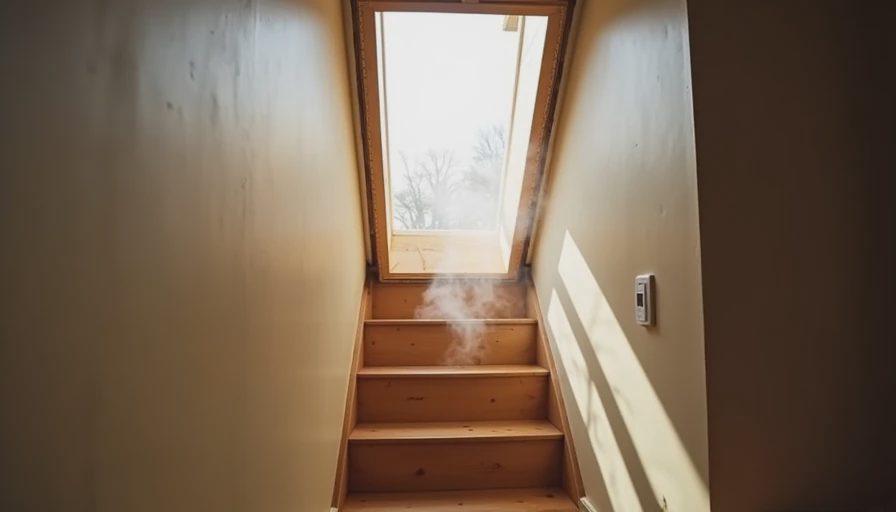
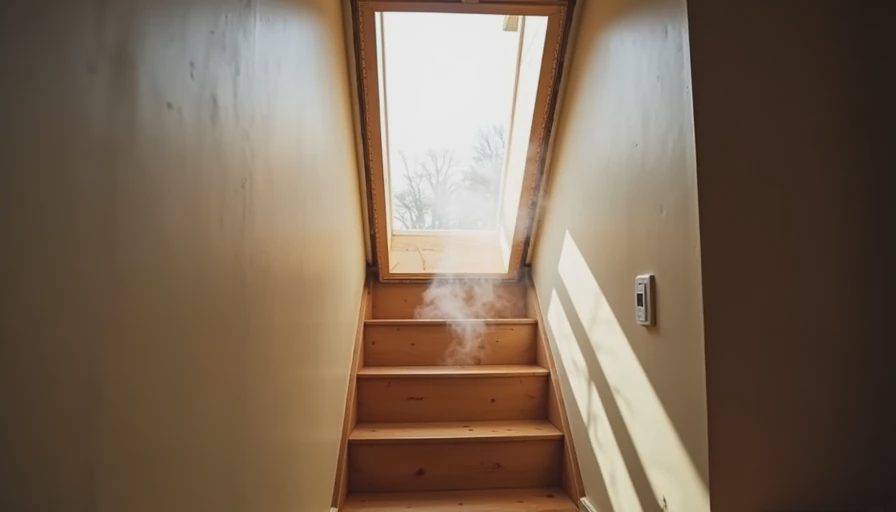
I stood in the upstairs hallway and pulled the attic stair string. The stairs unfolded with a metallic clang. I looked up into the opening and immediately saw daylight around the edges of the door.
Problem one: The attic access hatch had no weatherstripping. In winter, warm house air was pouring straight up into the attic like a chimney. That alone explained the cold bedrooms — the heat was literally leaving through the hallway ceiling.
What it told me: No one had thought about air sealing. The remodel had focused on what you see, not what you feel.
The second clue: insulation that told a story
I climbed up into the attic and turned on my headlamp.
The insulation was blown-in fiberglass, maybe 10–12 inches deep in some places. In others, it was pushed aside, matted down, or completely missing. I could see bare drywall above the master bedroom.
Problem two: Someone — probably an electrician or cable installer — had walked through the attic, kicking insulation aside, and never put it back. The bare spots were directly above the cold bedrooms.
What it told me: The house had been “updated” cosmetically, but no one had been in the attic for years except to run wires. That’s not a remodel. That’s a facelift.
The third clue: bathroom fans that vented nowhere
I noticed two plastic vent caps on the roof when I drove up. Good, I thought. They have bathroom exhaust vents.
Then I looked around the attic and found the other ends of those ducts. One was disconnected, lying on its side, blowing moist air directly into the fiberglass insulation. The other was connected but was a cheap, ribbed plastic hose that had collapsed. Neither was venting outside.
Problem three: Every time the couple showered, warm, humid air was being dumped into the attic. That moisture was condensing on the cold roof sheathing in winter and soaking into the insulation.
What it told me: The bathroom humidity and the musty smell weren’t a plumbing problem. They were an attic problem. And that moisture was slowly rotting the roof deck from the inside.
I put my moisture meter on the roof sheathing near the disconnected fan. It read 19%. For wood, anything over 15% is mold territory. Over 20% is rot territory.
The fourth clue: old wiring buried in insulation
I stepped carefully along the attic floor joists and noticed knob‑and‑tube wiring. Not a problem by itself — many old houses have it. But this wiring was buried under 10 inches of fiberglass.
Problem four: Knob‑and‑tube wiring needs to stay cool. It was designed to be in open air. When you bury it in insulation, it can overheat, which is a fire hazard. Modern codes require keeping it uncovered or removing it.
What it told me: Whoever added the blown‑in insulation either didn’t know about the knob‑and‑tube or didn’t care. That’s a red flag. If they cut that corner, what else did they ignore?
The fifth clue: a roof leak they didn’t know about
Near the chimney, I saw a dark stain on the roof sheathing. It wasn’t wet — it had dried. But there was a faint white residue around the edges. Efflorescence from minerals in the water.
Problem five: The chimney flashing had failed at some point. Water had run down the chimney, into the attic, and along the top of a wall. The stain had been painted over from below, so no one saw it in the living room. But the attic told the truth.
What it told me: The remodel had included fresh paint in the living room — including the ceiling. That paint hid the water stain. But the leak might still be active. I couldn’t tell without opening the drywall or waiting for the next heavy rain.
What the real estate listing didn’t show
That house had a beautiful new kitchen. Quartz countertops. Stainless appliances. A farmhouse sink. The bathrooms had new vanities and tile. The floors were refinished. On paper, it was “move‑in ready.”
But the attic was a time bomb. And the couple had paid top dollar for the cosmetics, unaware that:
They were losing hundreds of dollars a year in heat through the unsealed attic hatch and bare insulation spots.
Their bathroom moisture was rotting the roof deck from above.
Their old wiring was buried in insulation, a potential fire hazard.
They had a hidden roof leak that would eventually ruin a wall.
The musty smell in the master closet was mold starting to grow in the insulation.
None of this was visible from the living room. None of it would have shown up on a standard home inspection if the inspector didn’t crawl the whole attic (many don’t).
What I told them to do (and what you should do too)
I sat down with the couple at their new kitchen island — the beautiful one — and gave them a plan. No panic. Just priorities.
Immediate (next week):
Seal the attic hatch. Add weatherstripping and rigid foam insulation to the back of the door. Cost: $30. Effect: immediate reduction in heat loss.
Re‑route the bathroom fans. Disconnect the collapsed hose. Install rigid metal ducting (smooth interior, less moisture buildup) and vent through a new roof cap or a gable end. Cost: $200–300 DIY, or $500–800 hired. Effect: no more moisture in the attic.
Test the roof flashing. Run a garden hose up the roof and soak the chimney area while someone watches the attic. If water comes in, call a roofer. Cost of test: $0. Cost of repair: $200–500.
This winter (before next heating season):
Add attic insulation. Have the old fiberglass vacuumed out (to check for moisture damage and remove buried knob‑and‑tube issues), then air‑seal the attic floor, and blow in new cellulose. Cost: $2,000–3,000 hired, less if DIY with rental. Effect: warmer bedrooms, lower heating bills.
Address the knob‑and‑tube. Either have an electrician remove it (if the house is already rewired elsewhere) or at least clear insulation away from it. Cost: $500–2,000 depending on scope. Effect: fire safety.
Longer term:
Monitor the water stain. Draw a pencil line around it in the attic. Check every 6 months. If it grows, the leak is active. If not, it was old.
Why the attic is the most honest room in the house
Realtors don’t stage the attic. Contractors don’t flip the attic. Homeowners don’t clean the attic before selling.
The attic is where a house tells the truth.
Dirty, matted insulation? Someone walked around up there and didn’t care.
Dark stains on the roof sheathing? There’s been a leak, and no one fixed the cause.
Bathroom fans venting into the insulation? The last owner took shortcuts.
Old wiring buried in fluff? Whoever added insulation didn’t know or didn’t care about safety.
Gaps around the chimney wide enough to see daylight? Your heating bill is paying to warm the outdoors.
When you look at a house to buy — or when you’ve already bought one and wonder why it doesn’t feel right — go to the attic first. Bring a flashlight. Wear a mask. Crawl to the corners.
The living room lies. The attic doesn’t.
What our attic told me
When we bought our 1948 house, the attic looked fine. Some old blown‑in insulation, a few plywood planks for storage, no obvious problems.
Then I had a home energy audit with a blower door test. The auditor put a fog machine in the basement and watched where the smoke went. It poured out of every attic gap: around the chimney, around the plumbing stack, through the gaps in the attic floorboards.
Our attic looked fine. But it was leaking like a sieve.
We spent a weekend sealing every penetration with spray foam. Then we added 12 inches of blown‑in cellulose. The first winter after that, our heating bill dropped 18%.
The attic didn’t look different. But it told a better story.

No feedback yet — submit the first.