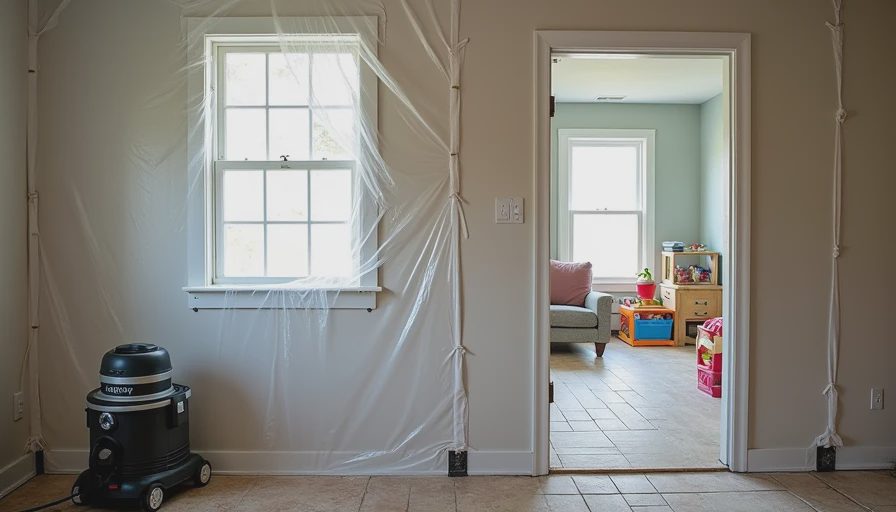
The call usually comes on a Sunday night.
“Grant, we’re taking down a wall tomorrow. It’s not load‑bearing. We’ve watched the videos. But our kids will be home while we work. Should we be worried?”
My answer is always the same: You’re right to ask. And yes, you should change your plan before you swing that first hammer.
I’m not anti‑DIY. I’ve demo’d plenty of things in our 1948 house. But I’ve also seen what happens when a well‑meaning parent underestimates how much dust one wall can make. That dust doesn’t stay in the demolition zone. It settles onto toys, carpets, crib rails, and sippy cups. And if that dust contains lead, asbestos, or just plain old toxic crud from 70 years of living, it becomes a health risk you don’t want to manage after the fact.
So before any dusty demolition starts in a house with kids under six (or any kids, really), I sit down with the parents and give them the same talk. Here’s exactly what I say.
First, assume the worst about the dust
You don’t know what’s in your old walls. Neither do I. That’s the point.
Paint layers from the 1950s? Almost certainly lead in a pre‑1978 house. Plaster from the 1940s? Sometimes contains asbestos. The dirt that’s settled inside the wall cavity for decades? Mouse droppings, fiberglass fibers, old insect parts, and who knows what else.
So the rule is: Before you create dust, act as if every particle is hazardous. Not because it’s likely — but because the cost of being wrong is too high, and the cost of being careful is very low.
The three things I tell every parent
1. Your kids cannot be in the house during active demo
Not in the next room. Not upstairs with the door closed. Not in the backyard with a babysitter while you work.
Here’s why: dust doesn’t respect doors. HVAC systems pull dust from one room and spread it through the whole house. Even if you seal a doorway with plastic, kids open doors. They crawl under gaps. They put their hands on floors that look clean but aren’t.
The safe minimum: Kids stay with a grandparent, friend, or at a daycare during the demolition phase. Ideally for the whole day, plus time for cleanup.
When we demo’d a small bathroom in our house, Elsie and Nolan spent the day at Megan’s parents’ house. It was inconvenient. It was also non‑negotiable.
2. You need a proper containment — not just a drop cloth
A drop cloth catches big chunks. It does nothing for fine dust.
What you actually need:
Zip‑wall poles or taped plastic sheeting that seals off the work area from the rest of the house. The plastic should go from floor to ceiling, and be taped at all edges.
An exhaust fan set up in a window of the work area, blowing out. This creates negative air pressure so dust doesn’t drift into the rest of the house.
A HEPA air scrubber if you’re doing a big demo (optional but excellent). You can rent one for $100‑150 a day.
Do not skip: Seal the HVAC register in the work area with plastic and tape. Turn off your furnace or AC during demo so it doesn’t suck dust into the ducts.
3. You must clean like a forensic scientist after
Normal cleaning — sweeping, vacuuming with a regular vacuum, dusting with a feather duster — makes things worse. It puts dust back into the air.
The post‑demo cleaning protocol:
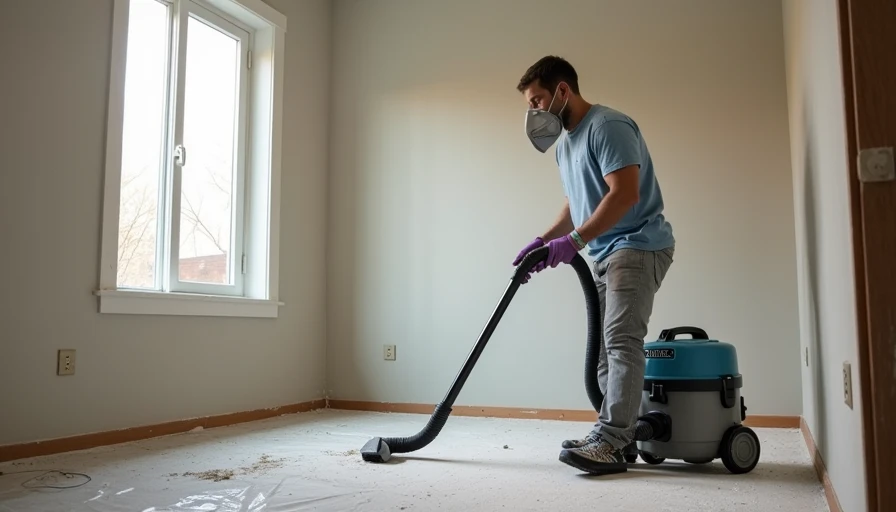
HEPA vacuum only. Not your household bagless vacuum. Rent or buy a true HEPA vac. Vacuum every surface: floors, walls, window sills, even the plastic sheeting before you take it down.
Wet wiping. After HEPA vacuuming, wipe all hard surfaces with a damp cloth (not dry). Change cloths frequently. Pay attention to baseboards, outlets, door frames, and window jambs.
No dry sweeping. Ever. Sweeping throws dust into the air where it will settle again later.
Launder or wipe soft goods. If any upholstery, carpet, or bedding was in the adjacent area, either wash it (hot water) or HEPA vacuum it. Better yet, remove soft goods from nearby rooms before demo starts.
After our bathroom demo, I wiped down every surface in the hallway outside the plastic barrier — even though I thought no dust had escaped. The rag came up gray. That dust would have ended up on Elsie’s hands.
The lead and asbestos question

Parents always ask: “Should we test before demo?”
If your house was built before 1978 and you’re disturbing more than a few square feet of painted surface, test for lead. You can buy a home test kit (3M LeadCheck) for $15‑30. Test the paint layers you’re about to sand, scrape, or break. If it’s positive, you have two choices:
Wet methods only: Keep everything damp during demo. No dry scraping, no sanding. Use a spray bottle to mist surfaces before cutting.
Call a pro: For large lead paint demolition (e.g., removing a whole wall of plaster), hire a lead‑safe contractor. It costs more, but you’re paying for containment and clean‑up that works.
Asbestos is trickier. You cannot see it. Home test kits exist, but you need to send a sample to a lab. If you’re demolishing drywall joint compound, old floor tiles, popcorn ceilings, or pipe wrap in a pre‑1980 house, test first. If it’s asbestos and you disturb it, you’ve created a much bigger problem. In that case, hire an abatement contractor. Do not DIY.
If you’re unsure, treat it as hazardous. Wet it down. Don’t break it into small pieces. Clean up with HEPA vac and wet wipes. Then get the debris tested after the fact so you know what you handled.
The “small project” trap
I see this all the time: “It’s just one hole for a new outlet.” Or, “I’m just removing a small section of baseboard.”
Small projects create small dust clouds. Small dust clouds still contain lead or asbestos if those materials are present. And small dust clouds are the ones parents tend to ignore because “it’s not a big deal.”
It is a big deal if your toddler puts a hand on that floor and then puts it in their mouth.
My rule: Any demo that creates visible dust — even a little — gets the same protocol: kids out of the house, plastic barrier, HEPA vac cleanup. The only exception is if you’re 100% certain the material is non‑hazardous (e.g., new drywall, unpainted wood).
What I did wrong (so you don’t have to)
I’m not proud of this.
Early in our house ownership, before Elsie was born, I decided to remove a small section of plaster in the basement to run a new wire. No kids in the house yet, so I wasn’t careful. I didn’t seal anything. I swept up the dust with a broom. It seemed fine.
Weeks later, I noticed a fine gray dust on a shelf in the living room — two floors up. That dust had traveled through the wall cavity, around pipes, and settled on that shelf. If Elsie had been crawling then, she would have been exposed.
Now I’m the dad who seals everything, wears a P100 mask, and vacuums with a HEPA for an hour after a single outlet hole.
You don’t have to be neurotic. But you should be deliberate.
A printable pre‑demo checklist for parents
Here’s what I hand to families before they start any dusty work. Copy it, tape it to your tool box.
Before demo:
Kids arranged to be out of the house for the day (and preferably overnight).
Furnace/AC turned off.
HVAC register in work area sealed with plastic and tape.
Work area sealed from rest of house with zippered plastic sheeting (floor to ceiling).
Exhaust fan set up in a window, blowing out.
Drop cloths (heavy canvas or plastic) on the floor.
HEPA vacuum ready (not household vac).
Spray bottle with water to wet surfaces before cutting.
P100 respirator for you (not a paper dust mask).
During demo:
Keep surfaces damp to suppress dust.
Don’t smash materials into small pieces (creates more dust).
Stop and re‑wet if things get dry.
Keep the plastic barrier zipped when you’re not moving through.
After demo (before removing plastic):
HEPA vacuum all surfaces inside work area, including walls and plastic sheeting.
Wet wipe all hard surfaces.
Remove debris in sealed bags (double‑bag if suspicious for lead/asbestos).
HEPA vacuum again.
Take down plastic carefully (fold inward to trap dust).
After removing plastic:
HEPA vacuum the adjacent rooms (floors, baseboards, window sills).
Wet wipe any nearby surfaces.
Run HVAC fan for 30 minutes, then change furnace filter.
Keep kids out for another few hours while dust settles.
When to just hire a pro
Some jobs are not worth the stress of DIY containment.
Hire a lead‑safe or asbestos abatement contractor if:
You’re removing more than 6 square feet of lead‑painted surface (e.g., a whole wall of plaster).
You have confirmed asbestos and you need to remove it (vs. seal it).
You’re demolishing a bathroom or kitchen with multiple layers of old materials.
You have a child with asthma or a known lead exposure already.
You simply don’t trust yourself to follow the protocol. No shame in that.
We hired a pro to remove a small asbestos pipe wrap in our basement. Cost me $800. It would have taken me a whole weekend of anxiety, and I still would have wondered if I did it right. Worth every dollar.


No feedback yet — submit the first.