Every week, I get an email with a photo attached. The photo is always taken at a dramatic angle — close up, flash on, highlighting every crack, stain, or uneven gap.
The message underneath is almost always the same: “Grant, I just found this. How scared should I be?”
I open the photo. Nine times out of ten, what I see is not serious. It might look ugly. It might be noisy (creaks, groans, drips). It might even be something that needs attention someday. But it’s not an emergency.
The other one time out of ten? That’s the house that has a real problem. And the difference between those two categories isn’t drama. It’s data.
Let me teach you how to tell scary from serious. Because once you learn this, you stop losing sleep over the wrong things — and you start spending money on the right ones.
Scary looks dramatic. Serious follows predictable rules.
Scary hits you in the gut. A crack that runs from floor to ceiling. A musty smell that seems to come from nowhere. A boiler that bangs like a hammer when it turns on. A window that won’t close all the way. A flickering light.
Serious is quieter. Serious is a crack that’s widening over time. A smell that comes with visible mold or wet wood. A boiler that’s leaking carbon monoxide into the house. A window that’s rotting the wall around it. A flickering light that’s accompanied by a burning smell or warm outlet.
The difference is progression and context. One snapshot tells you almost nothing. Change over time tells you everything.
Here’s how to sort the most common “scary” things into actual serious or just ugly.
Cracks in walls and ceilings
Scary: A hairline crack in a plaster wall, especially one that runs diagonally from a window or door corner. It looks like a lightning bolt. Your heart races.
The truth: Most cracks in old plaster are from normal settling, temperature changes, or the house taking a breath. Plaster is rigid. Wood framing moves. Cracks happen. They’ve probably been there for decades, just painted over.
How to know if it’s serious:
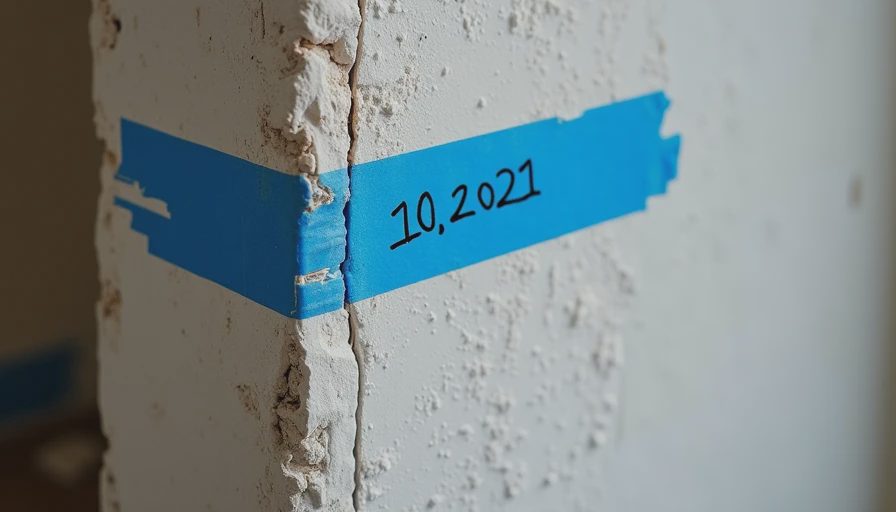
Stick a piece of painter’s tape across the crack. Mark the date on the tape. If the crack hasn’t grown past the tape in 6 months, it’s stable. Not serious.
Look for displacement. Is one side of the crack higher than the other? Can you fit a coin in the gap? That’s movement. Movement is more concerning than the crack itself.
Check for water stains. A crack that’s also wet, or has brown/yellow discoloration, means water is involved. Water makes everything worse.
When to call someone: The crack is wider than 1/4 inch, is growing month to month, or has vertical displacement (one side sticking out). That could be foundation settlement. Call a structural engineer, not a foundation waterproofing salesperson.
Damp spots on basement walls or floors
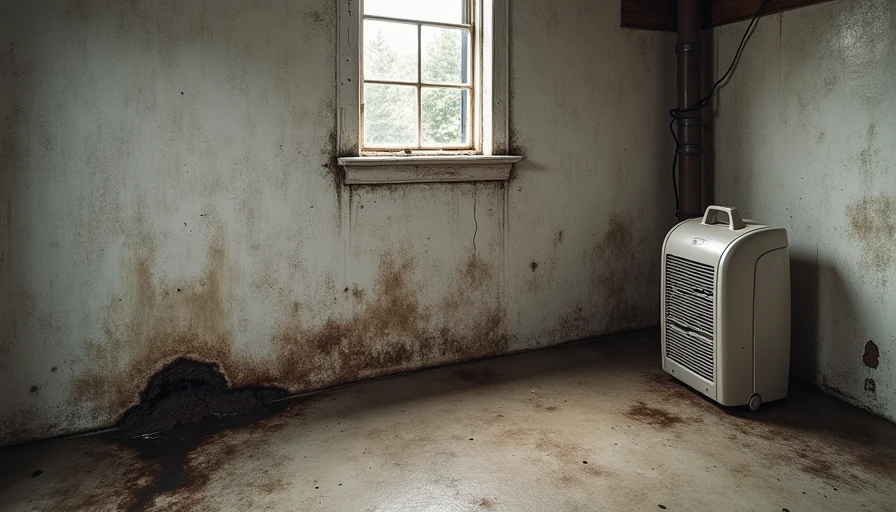
Scary: A dark patch on the concrete floor that never dries. Efflorescence (white, chalky powder) on the foundation wall. A trickle of water after a heavy rain.
The truth: Most basement moisture is not a foundation failure. It’s a water management failure outside the house. Gutters, downspouts, soil grading, and window wells cause 80% of basement dampness.
How to know if it’s serious:
Does it dry up between rains? If yes, it’s surface water, not groundwater. Fix the gutters and grading first.
Is the wall bowing inward? A damp wall that’s also curving or cracking horizontally is serious. That’s hydrostatic pressure pushing your foundation in.
Is there standing water more than 24 hours after rain? That’s poor drainage or a high water table. Still not necessarily a foundation failure, but needs a real solution (sump pump, drain tile, exterior excavation).
When to call someone: The wall is bowing, the crack is getting wider, or you’ve fixed gutters and grading and water still comes in every time it rains. Call a foundation contractor who does not also sell waterproofing systems. Get a structural opinion first.
Old wiring, flickering lights, or warm outlets
Scary: A light that flickers when the furnace turns on. An outlet that feels warm to the touch. Two‑prong ungrounded outlets. A breaker that trips occasionally.
The truth: Old wiring is not automatically a fire hazard. Millions of homes have knob‑and‑tube, cloth‑covered rubber wire, or ungrounded circuits. They’ve been working for 50–100 years. The danger is disturbing it, overloading it, or having damaged insulation.
How to know if it’s serious:
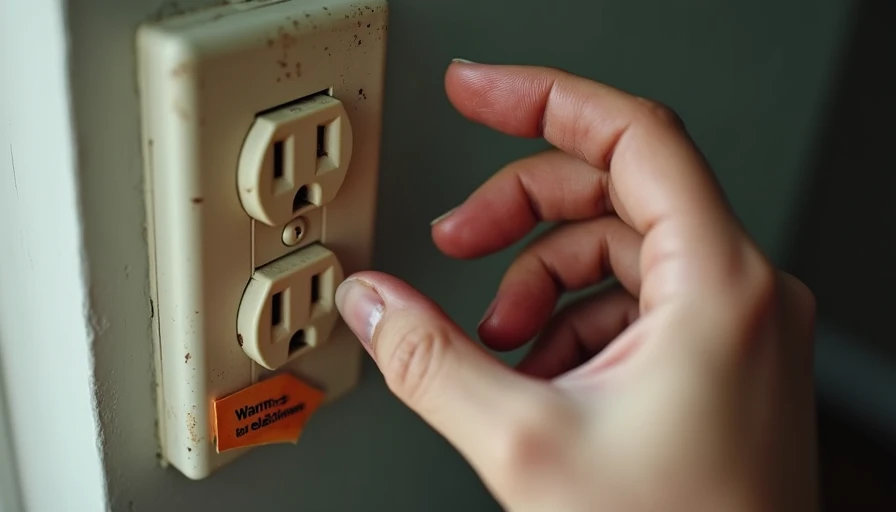
Is the outlet hot enough to feel warm but not burn your hand? That’s a loose connection or an overloaded circuit. Serious-ish. Stop using that outlet and call an electrician.
Does the flickering happen only when a specific appliance runs? Could be a loose connection or an overload. Not an emergency, but get it checked.
Does the breaker trip immediately when you reset it? That’s a short. Don’t keep resetting it. Call an electrician.
Is there a burning smell, buzzing sound, or visible charring? That’s a fire waiting to happen. Turn off that circuit at the panel and call an electrician today.
When to call someone: Any time you’re uncomfortable. But the real serious signs are heat, smell, sound, and repeated tripping. Old wire alone is not serious. Old wire that’s been chewed by mice, buried in insulation (for knob‑and‑tube), or modified improperly — that’s serious.
Musty smells, “basement air,” or visible mold
Scary: That familiar old‑house basement smell. A little mildew on a basement wall. A musty closet on the first floor.
The truth: Most musty smells are from high humidity, not toxic mold. Mold needs moisture. If you control moisture, you control mold. A little surface mold on concrete or a shower curtain is not a health crisis for most people.
How to know if it’s serious:
Is the mold covering more than 10 square feet (about a 3x3 area)? EPA says larger areas should be handled by pros, not because it’s toxic, but because disturbance releases spores.
Does someone in the house have asthma, allergies, or immune issues? Then even small amounts of mold can be serious for them.
Is the mold on porous materials like drywall, carpet, or upholstery? Those can’t be cleaned effectively. Cut out and replace.
Is there a hidden leak behind the wall or under the floor? That’s the serious part — not the mold itself, but the moisture source you haven’t found.
When to call someone: You have a family member with respiratory issues and visible mold. Or you can’t find the moisture source (leaky pipe, roof leak, gutter problem). Or the mold returns after cleaning. Otherwise, clean small areas with soap and water (not bleach — bleach doesn’t kill mold on porous surfaces) and fix the humidity.
Creaky floors, sloping floors, or bouncy floors
Scary: The floor slopes toward one corner. It creaks loudly when you walk across it. It bounces a little when the kids jump.
The truth: Old houses settle. They’re not perfectly level. That’s almost never a structural problem. Creaks are from nails rubbing on wood — annoying, not dangerous. Bounce in the middle of a large room is often just undersized joists for modern spans.
How to know if it’s serious:
Is the slope new? Put a marble on the floor. Does it roll to the same spot it did last year? If it’s moving, that’s serious. If it’s been the same for years, it’s just old-house character.
Is there a crack in the foundation wall directly below the bouncy spot? That’s a clue. If the foundation is sound, the bounce is a framing issue — annoying but not dangerous in most cases.
Does the floor feel spongy or soft? That could be rot or termite damage. Push a screwdriver into the subfloor. If it goes in easily, you have a problem.
When to call someone: The floor is getting bouncier over time. You can see daylight through a crack in the subfloor. Or you find rot or termite damage. Otherwise, live with the creaks and slopes. They’re not going anywhere.
Drafty windows and cold rooms
Scary: A window that whistles when the wind blows. A bedroom that’s 10 degrees colder than the rest of the house. Ice forming on the inside of the glass.
The truth: Drafty windows are almost never a structural problem. They’re an air sealing and insulation problem. And cold rooms are usually an attic problem, not a window problem.
How to know if it’s serious:
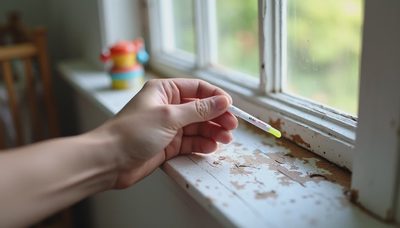
Is the window frame itself rotting? Push a screwdriver into the wood. If it sinks in like wet cardboard, the window is failing and could fall out. That’s serious.
Is there mold or condensation between window panes? That means the seal failed on a double‑pane window. Not serious — just ugly and inefficient.
Is the room cold even after you seal the windows and add attic insulation? Then you might have a heating system problem (undersized duct, blocked register, stuck damper).
When to call someone: Rotting frames. Windows that won’t stay open or closed (safety issue). Otherwise, rope caulk, shrink film, and attic insulation are your friends. New windows are rarely the right first answer.
The one‑question test for almost everything
When you find something scary in your old house, ask yourself:
“Has this changed in the last year?”
No change → Monitor it. Write the date on a piece of tape. Check again in 6 months.
Slow change (crack grew 1/16″) → Keep monitoring more frequently. Still not an emergency.
Fast change (crack grew 1/4″ in a month, floor slope got noticeably worse, new water stain appeared) → That’s serious. Call someone.
Active failure (water pouring in, sparking outlet, ceiling sagging visibly day by day) → Emergency. Call now.
Almost everything in an old house changes slowly — over seasons, over years. If it’s been the same for the last 5 years, it’s probably not going to kill you next week.
What I’ve learned from our house
Our 1948 house has a hairline crack in the basement wall. It’s been there since we moved in. I put a piece of tape across it with “10/2021” written on it. Four years later, the crack hasn’t reached the tape.
That’s scary-looking but not serious.
We also had a small water stain on the living room ceiling. I ignored it for a year. Then it got bigger. I went into the attic and found a roof leak around the chimney. That was serious — not because the stain was scary, but because it was growing.
I fixed the flashing. The stain dried. Not serious anymore.
The difference was paying attention to change, not just the initial shock.



No feedback yet — submit the first.