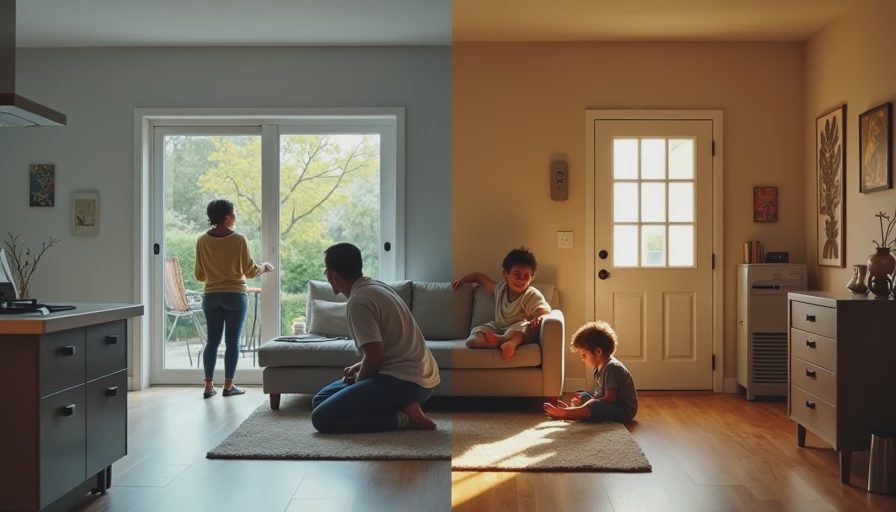
Every week, I get an email that breaks my heart a little.
It usually starts something like this:
“Grant, I love our old house. But I walked into my neighbor’s new build, and everything is level. The windows don’t stick. The floors don’t squeak. The basement is bone dry. Now I feel like ours is falling apart.”
I get it. I really do.
Megan and I have been to friends’ houses with open floor plans, soft-close drawers, and thermostats that learn your schedule. And yeah, for about ten minutes, I think: “Why don’t we have that?”
Then I come home. The front door still sticks in August. The upstairs floor still slopes a little toward the south wall. The basement still has that one corner that needs a dehumidifier running half the year.
And you know what? I don’t care anymore. Not the way I used to.
Because after hundreds of inspections and a decade of living in a 1948 house, I’ve learned something that no renovation show will tell you:
A perfect house doesn’t exist. And chasing one will break your bank account and your spirit.
What you actually need — what your family actually needs — is a house that is safe, dry, and honest.
Everything else is optional.
Safe: The short list that actually matters
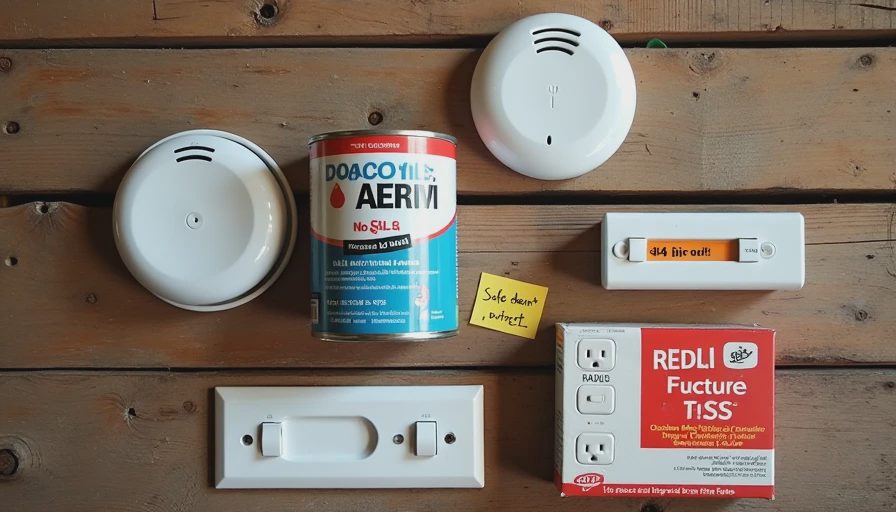
When people hear “old house safety,” their minds go straight to worst-case scenarios. Lead paint in every pore. Asbestos falling from the ceiling. Radon seeping in like a silent killer.
Here’s the truth I’ve learned: the list of things that can actually hurt your family in an old house is surprisingly short.
The real safety priorities are:
Falling hazards — loose railings, missing grab bars, uneven stairs
Fire safety — working smoke detectors (test them today), carbon monoxide alarms on every level
Lead paint — but only where it’s deteriorating on friction surfaces a child can reach
Asbestos — only if it’s friable (crumbly) and in a spot you’re disturbing
Radon — test once; mitigate only if levels are over 4 pCi/L
Electrical — aluminum wiring, ungrounded outlets near water, double-tapped breakers
That’s it. That’s the real list.
What’s not on the list?
A plaster crack in the living room ceiling
A non-structural wall that’s out of plumb
Original windows that aren’t energy efficient
A basement floor with a hairline crack
Safe doesn’t mean perfect. Safe means the risks you can’t live with are handled.
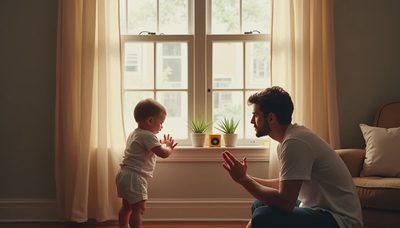
In our house, I fixed the wobbly staircase railing the week Elsie started walking. I put CO detectors on every floor. I encapsulated the lead paint on her window sills. I tested for radon (it was fine).
I did not rewire the whole house. I did not replace all the windows. I did not skim-coat every wall.
That’s the difference between safety and perfectionism.
Dry: The one word that predicts everything else
If I could teach you only one thing about old houses, it would be this:
Dry is the closest thing to magic.
A dry basement means:
No mold
No rot
No termites (they need moisture)
No musty smell
No rust on your tools or furnace
Lower humidity upstairs in summer
Warmer floors in winter
A dry crawlspace means your first floor isn’t a cold, drafty mess.
A dry wall cavity means your insulation actually works.
Here’s the hard truth I’ve learned from hundreds of inspections: most old-house problems are wet-house problems in disguise.
That musty smell? Wet.
That rotting sill plate? Wet.
That bulge in the drywall? Wet.
That weird bug infestation? Wet.
And the beautiful thing? Dry is usually achievable. You don’t need a perfect foundation. You don’t need a new basement. You need:
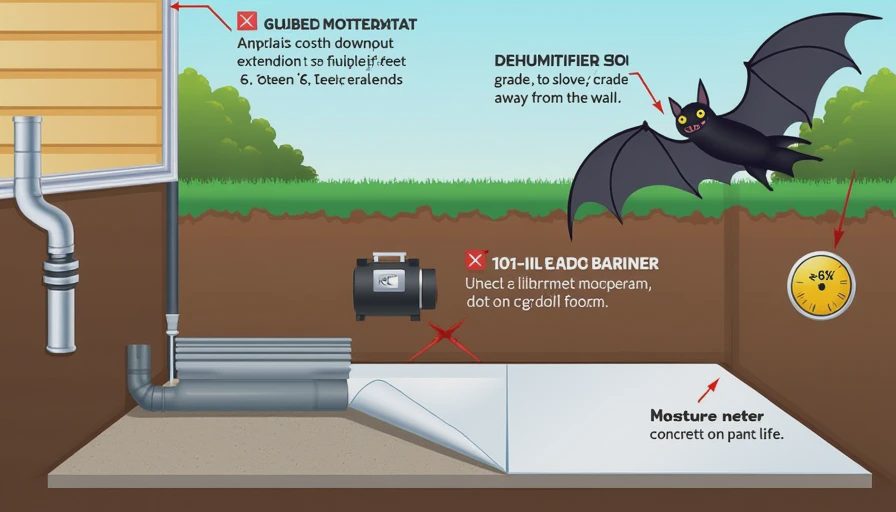
Gutters that discharge water at least six feet from the house
Downspout extensions that stay attached
Soil that slopes away from the foundation, not toward it
A dehumidifier in the basement during humid months
A vapor barrier on any crawlspace dirt floor
These aren’t expensive. They’re just intentional.
In our house, the basement isn’t “finished.” It’s not pretty. But it’s dry. And because it’s dry, I don’t worry about mold. I don’t worry about rot. I don’t worry about the kids playing down there on rainy afternoons.
Dry is boring. Boring is good.
Honest: The hardest one to learn
This is the one no contractor will tell you.
An honest house is one where you stop pretending.
You stop pretending that sloping floor is “character.” (It’s a settling foundation. It’s probably fine. But don’t call it character.)
You stop pretending that stuck window “just needs a little love.” (It needs a new sash cord or a bit of planing. That’s fine. Just be honest about it.)
You stop pretending the cold bedroom is “just the way it is.” (It’s telling you something about your attic insulation. Listen.)
But more than that: honest means accepting what your house is and isn’t.
My 1948 house is not:
Perfectly level
Energy efficient by modern standards
Silent when you walk across the floor
Free of quirks
My 1948 house is:
Safe for my kids
Dry in the basement (finally)
Warm enough with a sweater on
Paid for (mostly)
Full of memories
When I stopped wishing my house was something it’s not, I started enjoying what it is.
That’s the honest part. And it’s the hardest part for most people.
The neighbor’s perfect house isn’t real
I need to tell you something about that neighbor with the new build.
Their house has problems too. Different problems, but real problems.
New houses:
Settle and crack (watch that fresh drywall)
Have HVAC systems that weren’t balanced right
Use materials that off-gas for years
Often have drainage issues because the landscaping was rushed
Come with builder-grade finishes that look great for two years, then start failing
The difference is: they don’t know their problems yet. You know yours.
That’s not a weakness. That’s a head start.
A practical test for your own house
This week, walk through your house with just three questions:
Safe: Are the real hazards handled? (Railings, detectors, deteriorating lead paint, radon test, working CO alarms.)
Dry: Is the basement dry? The crawlspace? Any musty smells anywhere? Any water stains, even old ones?
Honest: What are you pretending not to see? That soft spot near the tub? That crack that’s getting wider? That room you just closed the door on five years ago?
If you can answer “yes” to safe, “mostly” to dry, and “okay, here’s the list” to honest — you’re doing better than most old-house owners I meet.
What we do in our house
Megan asked me last winter if I ever wished we’d bought a new house instead.
I thought about it for a second. Then I said:
“No. Because in a new house, I wouldn’t know what was behind the walls. In this house, I do. I know where every draft comes from. I know which corner of the basement gets damp after three days of rain. I know which window sticks and which door rubs.”
“That doesn’t sound like a good thing,” she said.
“It is,” I told her. “Because I also know what’s not a problem. And that means I sleep better than the guy in the new build who hasn’t found his problems yet.”
She laughed. Then she asked me to fix the drawer in the kitchen that won’t close all the way.
I’ll get to it. Eventually.
That’s an honest house.
No feedback yet — submit the first.