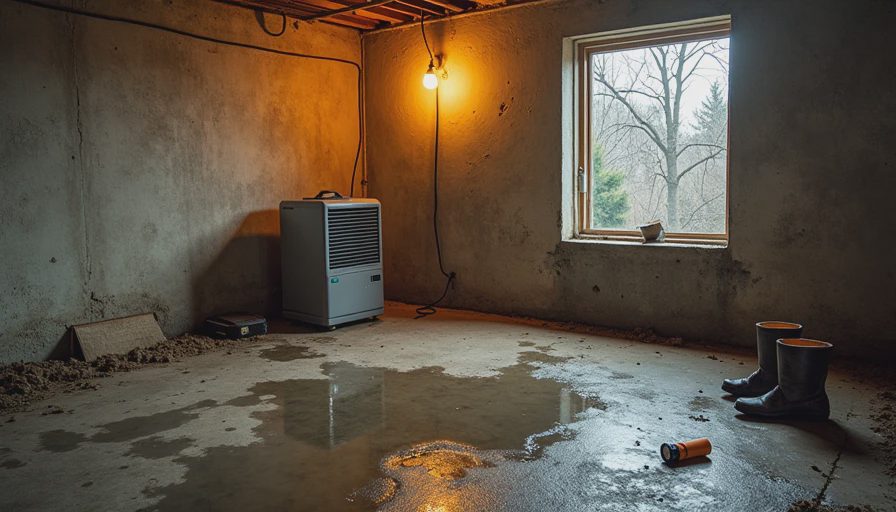
The email said: “Basement is fine. Just a little damp after heavy rain. We’ve lived with it for twelve years.”
I grabbed my flashlight and my boots and drove out to a 1970s split-level about twenty minutes south of Pittsburgh. The family had two kids under six. They were finally worried enough to call someone.
When I walked down those basement stairs, I didn’t see a disaster. No standing water. No mold crawling up the walls. No smell that would knock you over.
That’s exactly why I was worried.
What I found were three problems that had become so normal to the owners, they’d stopped seeing them. And each one was slowly costing them money, comfort, and — in one case — a real health risk they didn’t know about.
Here’s what I saw. And here’s what I want you to check in your own “fine” basement.
Problem 1: The “always a little damp” corner
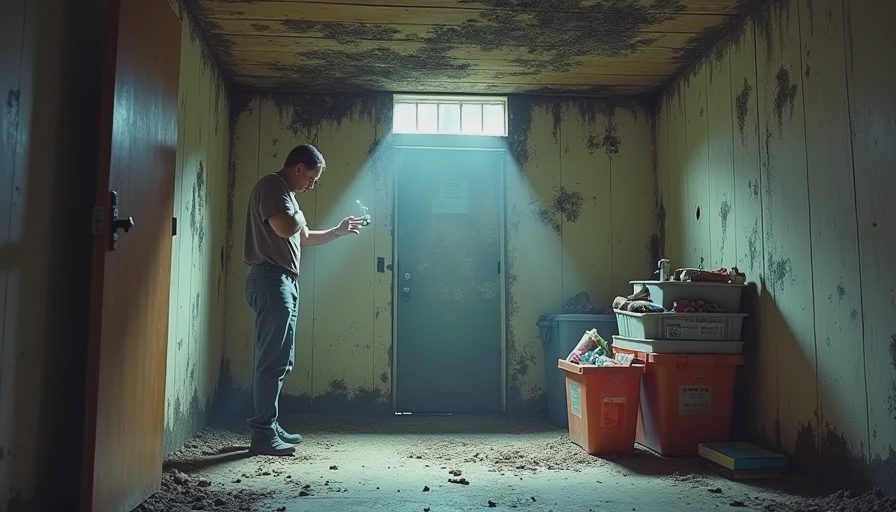
The southwest corner of the basement had a dark stain on the concrete floor. Not a puddle. Just a permanent shade of wet. The owner pointed to it and said, “Oh, that corner. Yeah, it’s been like that since we moved in. Never gets worse.”
Here’s what he’d normalized: chronic dampness.
And here’s what chronic dampness does, even without standing water:
It raises indoor humidity, which makes your first floor feel clammy in summer
It feeds dust mites (a major asthma trigger)
It creates the exact conditions mold needs — not a flood, just steady moisture
It slowly wicks up into the bottom plates of the walls, which can lead to hidden rot
I put my moisture meter on that concrete floor. It read 18%. For reference, dry concrete is under 5%.
What was actually happening: The downspout right outside that corner had a crack in the elbow. Every time it rained, water dumped right against the foundation. The water didn’t puddle inside — it just kept the concrete perpetually wet. Twelve years of that.
What I told them: Fix the downspout first. Extend it ten feet away from the house. Then run a dehumidifier in the basement set to 50% for two months. If the corner dries out, you’re done. If it stays wet, we dig.
Cost of the downspout extension: $25. What they’d normalized for twelve years: potentially thousands in future foundation repair.
Problem 2: The “it doesn’t smell that bad” storage room
Behind a cheap hollow-core door was a small unfinished storage room under the front porch. The owner opened it and said, “We just keep Christmas decorations in here. It smells a little musty, but it’s a basement, right?”
I stepped inside. The smell wasn’t strong. But it was wrong. Not earthy. Not dusty. Sweet and stale at the same time.
That’s the smell of hidden mold in a confined space.
I shone my light up at the underside of the porch floor. Dark gray and black patches. Not huge. But definitely there. The owner said, “I never look up.”
Here’s what he’d normalized: a low-grade mold colony breathing into his storage room.
And because that room shared air with the rest of the basement — and the basement shared air with the first floor via the HVAC system — those spores weren’t staying in the Christmas decorations.
What was actually happening: The porch above had a small roof leak. Not big enough to see inside the house. But water was running down the underside of the porch floor for years. The wood never fully dried. Mold grew slowly, steadily, invisibly.
What I told them: We don’t need to panic, but we need to act. First, take everything out of that room. Second, fix the porch roof leak (a $300 repair, not a re-roof). Third, clean the mold off the wood with a HEPA vacuum and an antimicrobial cleaner — not bleach. Fourth, run a fan in that room for two weeks to dry it completely.
They’d lived with that smell for so long they’d stopped noticing it. Their kids played in the family room directly above that space.
Problem 3: The “we never go down there” crawlspace
This one was my fault for not asking earlier.
I said, “Do you have a crawlspace?”
The owner said, “Yeah, off the back of the basement. But we never go in there. It’s just dirt and some old insulation.”
I should have guessed.
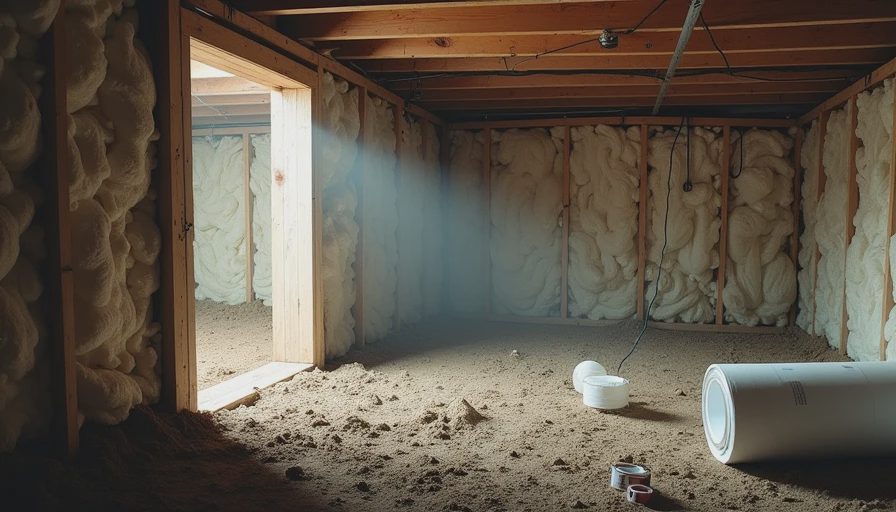
I opened the crawlspace door. The air that came out was cold and wet. I shined my light inside. Dirt floor. No vapor barrier. Fiberglass insulation hanging down between the floor joists above, dark with moisture and dirt.
And here’s what I noticed immediately: the first floor above that crawlspace was noticeably colder than the rest of the house. The owners had just assumed that room was “always drafty.”
Here’s what they’d normalized: an open dirt crawlspace acting like a cold, wet lung under their living room.
Here’s what happens in an unconditioned crawlspace with no vapor barrier:
Moisture from the soil evaporates upward
That moisture hits the cold floor joists and condenses
The wet insulation loses its R-value (it becomes useless)
The cold air sinks down, but also leaks up through gaps in the floor
And if there’s any ductwork in that crawlspace? You’re blowing humid air through the whole house
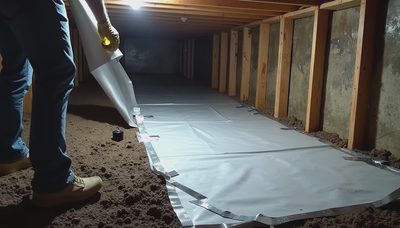
What I told them: This isn’t a five-figure problem. It’s a weekend project. Put down a 10-mil polyethylene vapor barrier over the entire dirt floor. Overlap seams by a foot. Seal it to the foundation walls with tape or foam. Remove the wet fiberglass insulation and replace it with rigid foam board or dense-pack cellulose. Then seal any holes in the subfloor above with caulk or spray foam.
Cost: about $500 in materials. What they’d normalized: higher heating bills, cold floors, and a humid house every summer.
What the owners said afterward
When I finished walking through these three problems, the husband sat down on the basement steps and said something I’ll never forget:
“I thought ‘fine’ meant nothing was on fire.”
That’s exactly the problem. In old houses, “fine” usually doesn’t mean good. It means tolerable. And tolerance becomes normal. And normal becomes invisible.
But here’s the good news: none of these problems were emergencies. No one needed to move out. No one needed a $30,000 foundation repair. Every single one was fixable with a clear head, a little money, and some work over a few weekends.
The bad news? They’d lived with them for twelve years. Twelve years of higher electric bills. Twelve years of mold spores. Twelve years of a cold room they’d stopped trying to fix.
A checklist for your “fine” basement
Walk into your basement this weekend with fresh eyes. Ask yourself:
Is any corner always damp? (Not puddled. Just darker than the rest.)
Is there any smell besides “basement”? (Musty, sweet, stale, earthy.)
Do you have a crawlspace with a dirt floor and no plastic?
Is there insulation hanging down anywhere that looks wet or dirty?
Do you have visible white or black spots on concrete, wood, or drywall?
Does the basement feel humid even when it hasn’t rained?
If you answered yes to any of these, you haven’t failed. You’ve just normalized something you shouldn’t have. And now you see it.
That’s the first step.
What I did in our basement after writing this
I’m not immune to normalizing problems. After I got home from that inspection, I walked into my own basement and looked at the corner near the sump pump.
There was a small white stain on the wall I’d seen a hundred times. Efflorescence — mineral deposits from water moving through the concrete. I’d always thought, “It’s fine. The sump pump works.”
I tested it with my moisture meter. 12%.
I’d normalized it. Just like they did.
Tomorrow I’m fixing the gutter outside that corner.

No feedback yet — submit the first.