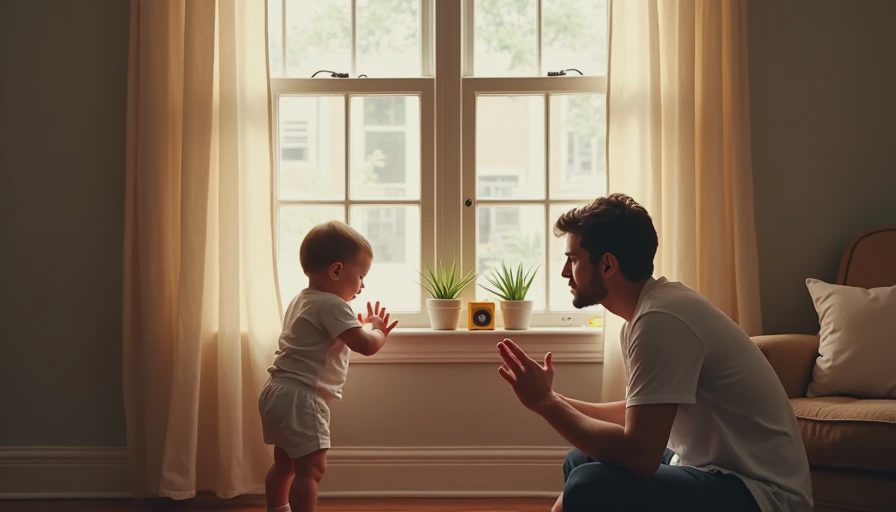
The first time Elsie put her mouth on a window sill, my heart stopped.
She was about 14 months old, newly mobile, and faster than I thought possible. I turned around for two seconds, and there she was — lips pressed against the old painted wood of a 1948 double‑hung window.
I’d spent years doing lead inspections. I knew the statistics. I knew that a single mouthing event was almost certainly harmless. And still, I felt that cold wash of parental panic.
What if? What if that paint contains lead? What if I haven’t done enough? What if I’m a bad parent and a bad inspector?
That night, after Elsie was asleep, I sat in the living room and made a list. Not a list of everything wrong with the house — that list would have been a hundred pages long. A list of what I could actually control without losing my mind.
That list changed how I parent in an old house. It changed how I sleep at night. And I want to share it with you, because I know you’ve felt that same spike of fear.
First, let’s name the problem
Raising kids in an older house is different from raising them in a new build — not necessarily more dangerous, but more visible.
A new house hides its problems behind fresh drywall and sealed envelopes. An old house wears its age on every surface: peeling paint, cracked plaster, drafty windows, sloping floors, a basement that smells like it remembers the 1950s.
When you’re a parent, every flaw looks like a threat. Your brain starts connecting dots that don’t need connecting:
Chipping paint → lead poisoning
Musty smell → toxic mold
Cold floor → pneumonia
Old wiring → house fire
And here’s the cruel part: your anxiety doesn’t make your kids safer. It just makes you exhausted.
So how do you stay vigilant without becoming obsessed? How do you protect your children without turning your home into a source of constant dread?
You need a system. Not more worry.
The 90/10 rule of old‑house parenting
I’ve learned that 90% of the risk in an old house comes from 10% of the problems. Find those 10%, fix them, and you can mostly ignore the rest.
The 10% that actually matters for young kids:
Lead paint — only where it’s deteriorating on surfaces within 3 feet of the floor that kids can reach or mouth (window sills, door frames, baseboards, crib rails)
Falling hazards — loose railings, unsteady furniture, stairs without gates, windows without stops
Carbon monoxide — working detectors on every level, especially near sleeping areas
Radon — test once, mitigate only if levels are high (over 4 pCi/L)
Electrical safety — outlets near water (GFCI), no frayed cords, no warm outlets
Water damage — active leaks that grow mold or rot structure
The 90% you can stop obsessing over:
Intact paint anywhere above reach
Cracks in plaster that aren’t growing
A basement that’s dry but smells a little old
Old windows that are drafty but not rotting
A floor that slopes 1/2 inch over 10 feet
Original wiring that’s never been touched and isn’t overloaded
I’m not saying ignore those things forever. I’m saying they don’t need to live in your head every day. Put them on a monitoring list. Check them once a year. Then go play with your kids.
The “good enough” standard
One of the most freeing things I’ve learned is that safe does not mean perfect.
A window sill with intact lead paint that you’ve painted over with encapsulation paint? Safe enough. A basement that’s dry 350 days a year but gets a little damp after a hurricane? Safe enough. A bedroom that’s 68 degrees when the thermostat is set to 70? Safe enough.
The perfect house does not exist. The perfectly safe house does not exist. Kids fall down stairs in brand new houses. Kids get lead exposure from playgrounds and imported toys. Kids get sick from daycares and grocery carts.
Your job is not to eliminate every risk. Your job is to reduce the big ones to a manageable level and then get on with living.
Here’s my rule of thumb: if you’ve addressed the 10% list above, your house is safer than most of the houses your parents grew up in. And you turned out fine.
Practical strategies for not losing your mind
1. Do one thing at a time
When you first start looking at your old house through parent eyes, you’ll see fifty things to fix. Don’t try to fix fifty things. Pick one.
This month: test the window sills in the nursery. Next month: add a carbon monoxide detector in the hallway. The month after: fix the wobbly banister.
Old‑house parenting is a marathon, not a sprint. Your kids will still be young next year. You have time.
2. Create a “don’t worry about this” list
Write down everything that scares you about the house. Then go through it with a calm friend, a trusted inspector, or this blog. Mark each item as:
Fix now (lead paint on baby’s window sill)
Fix this year (drafty door that lets in cold air)
Monitor (hairline crack in basement wall)
Ignore (scuff mark on baseboard, slightly uneven floor)
Then put the “ignore” list somewhere you won’t see it. Burn it if you want. Those things are not your problem.
3. Stop testing everything
I see parents who test every surface in their house for lead. They test the walls, the trim, the ceiling, the closets, the garage door. They spend hundreds of dollars and get dozens of positive results. Then they panic because there’s lead everywhere — even though most of it is intact and harmless.
Test strategically: only surfaces that are deteriorating and within a child’s reach. That’s it. If the paint is smooth and not chipping, test optional. Just paint over it and move on.
4. Give yourself permission to live
This is the hardest one.
You will not be a perfect parent. You will not have a perfect house. Your kids will occasionally put something in their mouths that they shouldn’t. They will fall down. They will get sick. And 99.9% of the time, it will have nothing to do with your old house.
I have to remind myself of this constantly. When Nolan found a paint chip on the basement floor last summer, I felt that old panic rise. Then I remembered: the basement floor paint was tested — negative. He was fine. I was the one who needed calming down.
The best thing you can do for your children is to be present, not panicked. They don’t need a perfect house. They need you.
5. Schedule your worry (seriously)
If you’re the kind of person who lies awake thinking about the furnace or the foundation, try this: set aside 15 minutes on Sunday evening to worry about the house. Write down your concerns. Then tell yourself you’re not allowed to think about them again until next Sunday.
It sounds silly. It works. Your brain needs boundaries.
What we actually do in our house

People assume that because I’m an inspector, our house is a fortress of safety. It’s not.
Here’s what we have done:
Encapsulated the lead paint on Elsie’s window sill (took an afternoon)
Added carbon monoxide detectors on every floor (cost $150)
Fixed the wobbly basement railing (cost $20 in brackets)
Tested for radon (it was fine)
Put outlet covers on all the outlets (standard parenting stuff)
Here’s what we have not done:
Removed every speck of lead paint (unnecessary)
Replaced the original 1948 windows (they’re drafty but not dangerous)
Finished the basement (it’s dry enough but ugly)
Rewired the whole house (the old wiring is intact and not overloaded)
Our kids have had normal blood lead tests. They’ve never been sick from the house. They’ve fallen down the stairs exactly once (Megan’s watch, not the house’s fault).
They’re fine. Your kids will be fine too.
When to actually worry (a short list)
I don’t want to sound like nothing matters. Some things do.
Call a professional today if:
Your carbon monoxide detector is going off (evacuate first, then call)
You see active sparking or smell burning from an outlet or panel
A ceiling or wall is visibly bulging or sagging (structural failure)
You have sewage backing up into the basement (health hazard)
Call a professional this week if:
A child’s blood lead test comes back elevated (over 5 µg/dL)
You have a large area of deteriorating lead paint (more than 6 square feet) that you can’t safely seal
You find active termite damage or rot in structural wood
A crack in the foundation is growing wider month by month
Everything else can wait. Everything else is manageable.
A mantra for anxious parents
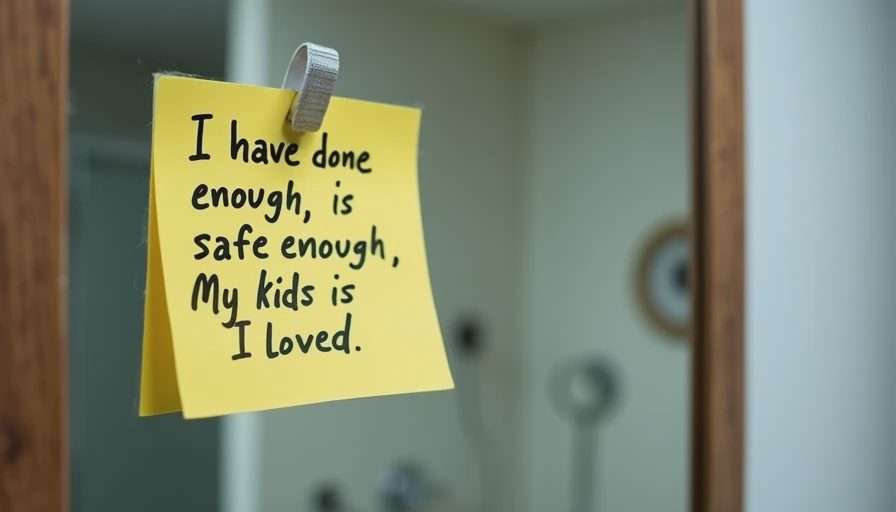
I wrote this on a sticky note and put it on my bathroom mirror. You can steal it:
“I have done enough. The house is safe enough. My kids are loved. That’s what matters.”
Say it when you find a new crack. Say it when the basement smells weird. Say it when you read a scary article about old houses.
Then go play with your children. They don’t care about the windows. They care about you.
No feedback yet — submit the first.