
Let me start with something that might surprise you.
I don’t think every chip of lead paint in a house with kids is a five-alarm fire.
I know that sounds strange coming from someone who spent years doing environmental risk assessments. But here’s the truth I learned after hundreds of old-home inspections: fear sells, but calm judgment keeps families safe and sane.
Megan and I have a 1948 house. Our daughter Elsie is five. Our son Nolan is two. They sleep in bedrooms with original window jambs. Those jambs almost certainly have old lead paint under multiple layers of latex.
And no, we haven’t gutted their rooms.
Here’s why — and more importantly, here’s how you can make the same kind of clear-headed decision for your family.
First, understand the real risk (not the internet version)
Lead paint is dangerous. That’s not up for debate. But the danger isn’t magic. It follows predictable rules.
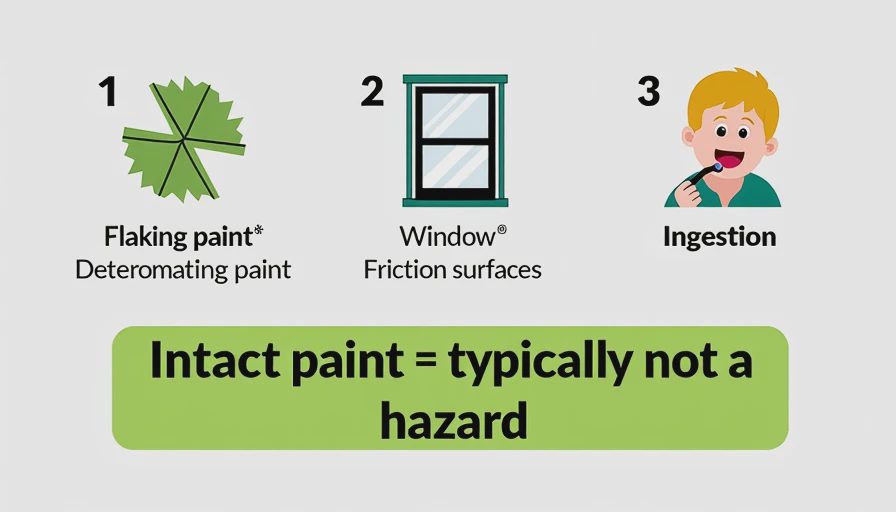
The real risk comes from three things:
Deteriorating paint — chipping, peeling, chalking, or rubbing
Friction surfaces — windows that open and close, doors that rub, drawers that slide
Ingestion — kids putting paint chips or lead-contaminated dust in their mouths
What’s not an emergency?
Intact lead paint that’s buried under several layers of modern latex or oil paint. If it’s not crumbling and not on a rubbing surface, it’s mostly just sitting there. It’s not releasing lead into the air. It’s not poisoning anyone.
The EPA itself says: “Lead-based paint that is in good condition is usually not hazardous.”
So let’s stop acting like every old wall is radioactive.
The four-question test for any kid’s bedroom
When I get a call from a worried parent, I walk them through exactly four questions. You can do this right now in your own house.
Question 1: Is the paint deteriorating?
Look at:
Window sills and jambs
Baseboards and door frames
Walls near radiators or heat registers
Closet door edges
Do you see:
Chips larger than a fingernail?
Peeling or bubbling?
Fine powder when you wipe it with a damp rag?
Chew marks (toddlers love window sills)?
If no — the paint is intact. Move to Question 4 (spoiler: you can slow down).
If yes — go to Question 2.
Question 2: Is it in a spot a child can reach?
Lead paint on a 10-foot ceiling? Not a problem.
Lead paint on a window sill 18 inches off the floor? That’s a problem.
Toddlers put their mouths on everything. Sills, door edges, crib rails, baseboards. If the deteriorating paint is below 3 feet — and especially below 2 feet — the risk is real.
If it’s out of reach — you have time. Stabilize it and monitor.
If it’s within reach — go to Question 3.
Question 3: Is it a friction or impact surface?
A windowsill that opens and closes? That’s a friction surface. Every time you raise the window, microscopic lead dust gets released.
A door that rubs against its frame? Same problem.
A baseboard that just sits there? That’s not friction. It’s lower risk even if paint is chipping, because nothing is grinding it into dust.
If it’s a friction surface + deteriorating + within reach — that’s your highest priority. Act now.
If it’s not a friction surface — you can stabilize and monitor.
Question 4: How old is your child?
This matters more than people admit.
A 10‑year‑old who doesn’t put things in their mouth is very different from an 18‑month‑old who chews windowsills like a beaver.
Under age 3 — highest sensitivity. Their brains are developing fast, and hand-to-mouth behavior is constant.
Ages 3 to 6 — still sensitive, but more teachable (“we don’t eat paint chips”).
Over age 6 — much lower risk from incidental exposure.
So when do you act now?
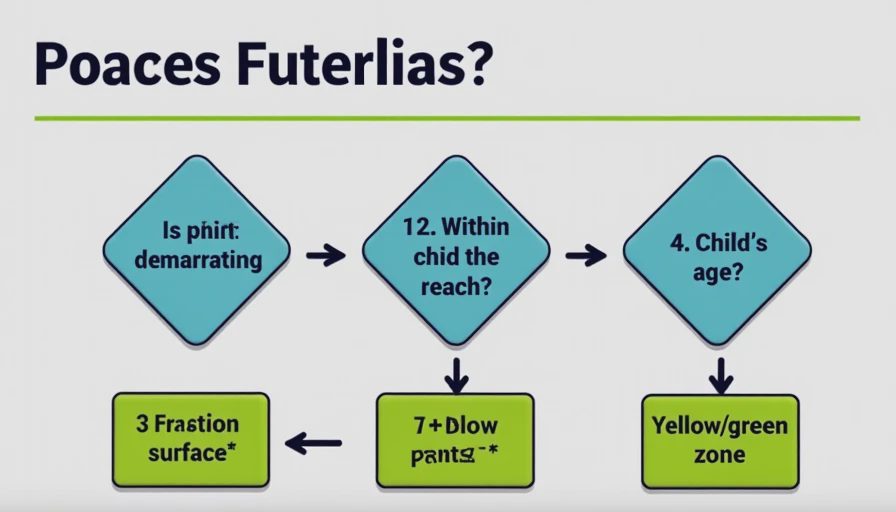
Act now — meaning in the next 30 days — if you check three or more of these boxes:
Paint is visibly deteriorating (chipping/peeling/powdering)
It’s on a window, door, or drawer (friction surface)
It’s within 3 feet of the floor
Your child is under age 6
You’ve seen your child mouth that surface
That’s your red zone.
In that case, here’s what “act now” actually looks like (not gut the room, not move out):
Immediately clean up any visible paint chips with a wet paper towel. Don’t vacuum — that spreads dust. Wet wipe only.
Cover the area temporarily with contact paper, duct tape, or a piece of furniture. This stops access today.
Get a lead test kit from the hardware store ($10–$20) to confirm it’s lead. Not required if it’s an old house and paint is deteriorating — you can assume it’s lead — but testing helps you know what you’re dealing with.
Call a lead-safe certified contractor for a small repair job (encapsulation or replacement of that window, not the whole house).
Get a blood lead test for your child at their next doctor visit. Not because you should panic — because you should have a baseline.
That’s it. You don’t need to move out. You don’t need to replace all the drywall. You just need to address that specific hazard.
When can you slow down?
You can slow down — meaning watch, wait, and plan over 6–12 months — if:
The paint is intact (no chips, no powder, no peeling)
Or it’s on a wall or ceiling more than 3 feet off the ground
Or it’s not a friction surface
And your child is over age 3 with no mouthing behavior
In this yellow/green zone, here’s your slow-but-smart plan:
Take photos so you can monitor change over time.
Wet-clean the room weekly — damp mop floors, wipe sills with wet paper towels. This controls dust, which is the main exposure pathway.
Consider encapsulation paint (special thick paint that seals lead in). A quart costs $30. Paint right over the existing lead paint. This is DIY-friendly if the surface is sound.
Reassess every 6 months — take another photo, check for new chips.
Wait until your child is older to do a full abatement. By age 6 or 7, the risk equation changes dramatically.
This is exactly what we did in Elsie’s room. The window jambs had intact lead paint under three layers of latex. No chips. No chewing. We encapsulated with lead-sealing paint and added window well guards so she can’t reach the sill directly. That was three years ago. Her blood lead levels have always been normal. I sleep fine.
One thing I never want you to do
Don’t DIY lead paint removal by sanding, scraping, or using a heat gun over 1100°F.
That turns a manageable problem into a toxic dust cloud. I’ve seen it happen. A well-meaning dad with a sander and a respirator contaminated his whole upstairs in an afternoon. It cost him $8,000 for professional cleanup.
If you need to remove lead paint (not just cover it), hire a certified lead abatement contractor. That’s not fear — that’s math. The cleanup is always more expensive than the prevention.
A final thought from our house
Megan asked me once if I worried about Elsie and Nolan sleeping in a 1948 house.
I told her the truth: “I worry more about the car seat installation and the trampoline at the neighbor’s house.”
Lead paint is a real risk. But it’s a manageable one. You don’t need to be a hero. You just need to know:
Which spots are actually dangerous
Which spots can wait
What to do today vs. next year
That’s what I’m here for.
If you’re not sure about your child’s bedroom, take photos and send me a message through the contact page. I’ll tell you what I’d do if it were my kid’s room.
No scare tactics. Just one dad and old-house inspector to another.



No feedback yet — submit the first.